
The most helpful assistive technology for autism does not try to “fix” autism. It helps autistic people communicate more clearly, learn in ways that fit them better, and move through daily life with less friction.
That is why assistive technology matters so much right now. The biggest shift in 2026 is not that one magical device suddenly exists. It is that families, clinicians, and schools now have more ways to combine proven supports like AAC, visual systems, and learning apps with newer tools such as predictive text, AI-assisted personalization, remote coaching, and smarter mobile workflows. AAC remains one of the most established forms of assistive support for autistic people, and autism organizations and speech-language experts continue to emphasize its role in supporting communication and independence.
The key is knowing which tools actually help and which ones are only interesting in theory.
AAC Is Still The Most Important Technology Category To Understand
When families hear about tech for autism, they often think first about apps. But the most important category is still AAC, or augmentative and alternative communication.
AAC includes a range of systems, from picture-based supports and communication boards to speech-generating devices and tablet-based communication apps. ASHA notes that clinicians assess the need for AAC devices in autism care, and Autism Speaks explains that AAC can support autistic people of all ages by promoting independence, communication, and social interaction.
This matters because many people still assume speech is the only “real” communication. That is not true. Communication technology can help a person express needs, make choices, participate in learning, and build more control over daily life.
Autism Assistive Devices Are Broader Than People Think
When people picture autism assistive devices, they often imagine one dedicated communication tablet. In reality, the category is much broader.
It can include:
- Speech-generating devices
- Picture-based communication systems
- Visual timers
- Wearable prompts
- Noise-reduction tools
- Tablets used for structured communication or learning
- Smart-home supports that reduce task load
- Visual scheduling tools
Some of these are high-tech and some are simple. What matters is not how advanced the tool looks. What matters is whether it increases access, reduces frustration, or makes an important skill more usable in real life. Research and clinical guidance both support the use of technology-based and nontechnology-based AAC options depending on the person’s needs.
Communication Technology Is Getting Smarter
One of the biggest changes in communication technology autism support is that AAC systems are becoming more adaptive.
Recent research notes that AI is beginning to make AAC systems more predictive, context-aware, and easier to personalize, rather than relying only on static vocabulary layouts and labor-intensive customization.
In practical terms, that means newer systems may be better at:
- Predicting likely words or phrases
- Organizing vocabulary around context
- Adapting layouts to the user’s patterns
- Reducing the number of steps needed to say something important
That does not mean AI replaces skilled AAC assessment. It means the tools themselves are becoming more responsive.
AAC Does Not Prevent Speech
This myth still causes families to delay support.
ASHA explicitly states that AAC can enhance independent communication and often supports speech development rather than preventing it. Autism Speaks also notes that assistive devices and visual supports can foster spoken-language development rather than blocking it.
That is a crucial point in 2026, because waiting for speech before introducing communication support can delay learning, reduce participation, and increase frustration. A person does not need to “earn” communication support by speaking first.
Apps Are Most Helpful When They Solve A Real Problem
There are more apps for autism support than ever, but availability is not the same as usefulness.
Research reviews have found that autism-focused apps can help improve communication and learning when they are designed well, aligned with evidence-based methods, and matched to the user’s needs. Useful app features often include engaging design, progress tracking, and structured learning steps.
The most helpful app categories usually include:
- Communication supports
- Visual schedules
- Emotion check-ins
- Task sequencing
- Timers and transition supports
- Social learning supports
- Skill practice tied to home or school routines
The right question is not “What is the best app?” It is “What problem am I trying to solve with this app?” That is also why families often benefit from exploring digital autism resources for parents, since the best tools are usually the ones that fit real daily needs instead of just sounding impressive.
AI Is Expanding Learning Supports, But It Still Needs Guardrails
The newest conversation is around AI tools for autism learning.
Recent reviews describe AI being used in autism-related assistive technology through smart prompting, robotics, adaptive interfaces, and more personalized communication and learning support. They also warn that challenges remain around bias, transparency, and real-world integration.
In 2026, the most realistic use of AI is not “AI teaches everything now.” It is that AI can help with:
- More personalized prompting
- Adaptive language support
- Easier content modification
- Pattern tracking over time
- Teacher or caregiver coaching systems
- Smarter AAC prediction and customization
But families should still be cautious. A tool that feels impressive is not automatically appropriate, private, or evidence-based.
Autism Technology Tools Work Best With Human Support
One of the biggest mistakes people make is assuming technology works on its own.
The strongest autism technology tools are usually the ones used inside a real support system. That means a child, teen, or adult is not only handed a device. They are taught how to use it, supported in using it across settings, and given adults who model and respond to it consistently.
ASHA’s evidence maps continue to track systematic reviews of AAC interventions using speech-generating devices in autistic children, and caregiver-implemented AAC research also supports the idea that communication gains improve when families are actively involved.
Technology is not the intervention by itself. It is part of the intervention.
Visual Supports Are Still Powerful Even When They Are Simple
Not all meaningful assistive technology has to be high-tech.
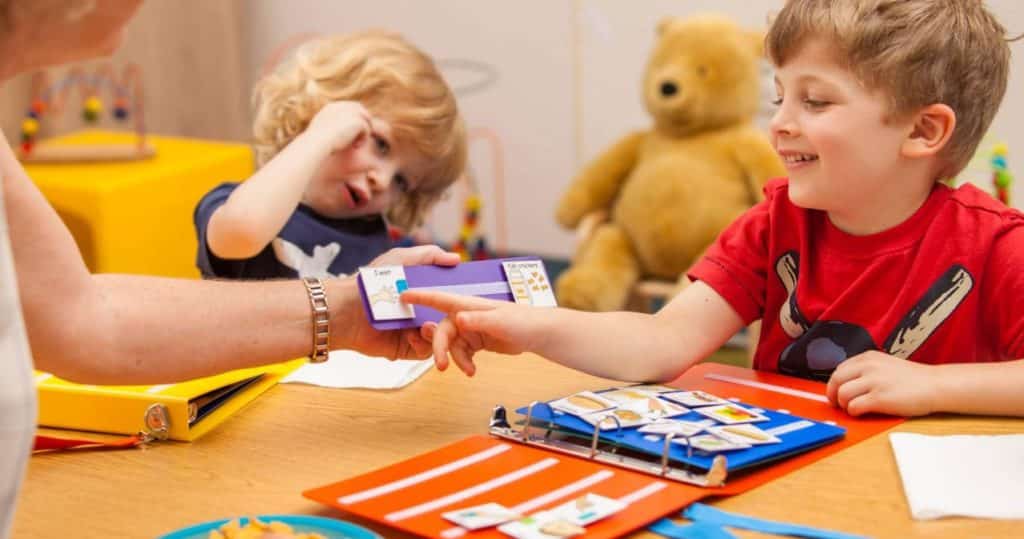
Visual supports remain one of the most practical tools for many autistic people because they reduce language load, make expectations clearer, and support transitions and routines. Even Autism Speaks’ communication guidance points to picture-based supports as useful tools for helping autistic children express requests and thoughts.
That means a visual schedule on a tablet, a printable sequence board, a timer app, or a picture-choice system can still be life-changing if it helps the person understand what comes next and communicate more clearly.
The Best Tools Increase Independence
Good assistive technology should not only make adults or caregivers feel more organized. It should increase the autistic person’s own independence.
That might mean:
- Asking for help more clearly
- Making choices without guessing
- Following a routine with fewer prompts
- Learning vocabulary more successfully
- Participating more fully in school
- Handling transitions with less distress
Autism Speaks specifically frames assistive technology, especially AAC, as something that can promote independence and increase social interaction.
That is the standard worth using when choosing tools: does this increase usable independence?
What Families Should Look For In 2026
With so many products available, the best tools usually share a few traits:
- They solve a specific communication or learning problem
- They can be used across settings, not only in one session
- They are realistic for caregivers or educators to support
- They do not rely on hype more than evidence
- They respect the autistic person’s communication style
In other words, the goal is not “latest tech.” The goal is better access. It is also important for families to understand autism resources for parents, including financial aid, grants, and support, because the right assistive technology is only useful if families can realistically access and sustain it.
A Better Way To Think About Assistive Technology
The real promise of assistive technology in 2026 is not novelty. It is fit.
The right support can make communication more accessible, learning more personalized, and daily life less frustrating. The wrong support can become just another abandoned app or underused device.
If your family is exploring assistive technology for autism, the smartest next step is to focus on tools that support real communication, real participation, and real independence, then build around them with thoughtful human support. The Dan Marino Foundation can help families think more clearly about what kinds of supports may actually improve daily life and long-term development.
FAQs
What Is Assistive Technology For Autism?
It refers to tools that help autistic people communicate, learn, regulate, and participate more independently. This can include AAC, visual supports, apps, tablets, timers, and other low-tech or high-tech systems.
What Are Some Common Autism Assistive Devices?
Common examples include speech-generating devices, communication boards, picture-based systems, tablets with AAC apps, visual timers, and other tools that reduce communication or daily-living barriers.
How Does Communication Technology Help Autistic People?
It can help people express needs, make choices, participate in conversation, and build independence when spoken language alone is not enough or not always reliable.
Do AAC Devices Stop Speech From Developing?
No. Major speech-language sources explain that AAC often supports communication growth and can also support speech development rather than preventing it.
Are Apps For Autism Support Actually Helpful?
They can be, especially when they are designed around real needs such as communication, schedules, skill-building, and progress tracking. Research reviews suggest autism-support apps can improve communication and learning when well designed and used appropriately.
Are AI Tools For Autism Learning Ready To Replace Teachers Or Therapists?
No. Current research suggests AI can improve personalization, prompting, and adaptive support, but it still needs careful oversight, ethical safeguards, and human guidance.
What Makes Autism Technology Tools Most Effective?
They work best when they are matched to a specific need, supported consistently by caregivers or educators, and used across real-life settings instead of only in isolated practice.
Should Families Start With High-Tech Or Low-Tech Supports?
That depends on the person and the goal. Some people benefit most from high-tech AAC, while others do well with simple visual supports or a mix of both. The best choice is the one that improves access and is realistic to use consistently.