
Schools talk a lot about “support,” but for autistic students and their families, that word can feel vague. What actually happens beyond the IEP meeting? Where does support show up during a noisy lunch break, a confusing group project, or a meltdown after a schedule change?
That is where autism resource rooms come in. When done well, they turn “resources on autism” from a stack of documents into a real place: a room where students can reset, learn skills, and get the kind of help that actually changes how their school day feels.
This guide breaks down how schools use autism resource rooms, what happens inside them, the special education tools they rely on, and how families can make sure these spaces truly support student success.
What Is an Autism Resource Room, Really?
An autism resource room is usually a dedicated space in a school where autistic students can:
- Receive targeted academic support.
- Practice social and life skills.
- Regulate sensory overload in a quieter environment.
- Work with staff who understand autism-specific needs.
It is meant to complement the regular classroom, not replace it. Some students visit the resource room for a specific subject. Others use it during certain parts of the day that are especially hard, like transitions, unstructured time, or after a triggering event.
At its best, the resource room is not just “a smaller room.” It is a structured environment built intentionally around school autism support and the sensory, emotional, and communication needs of autistic students.
Why Schools Create Autism Resource Rooms
Schools that invest in autism resource rooms usually see the same pattern: students are capable, but the regular classroom environment works against them.
Common challenges include:
- Noise, movement, and visual clutter that make it hard to focus.
- Fast-paced instruction that does not allow time to process information.
- Unpredictable transitions that trigger anxiety or shutdowns.
- Social demands that feel confusing or exhausting.
By designing a dedicated space with resources on autism at the center, schools can:
- Offer direct support without pulling a student completely out of their peer group.
- Reduce meltdowns, elopement, or class disruption by giving students a safe place to recalibrate.
- Teach coping strategies and skills in a calm setting, then generalize them back into the main classroom.
The goal is not to isolate; it is to give students a base of support that makes inclusion sustainable.
What Autism Resource Rooms Look Like Inside
A strong autism resource room is not just a smaller classroom. It is a space designed on purpose: quieter, more predictable, and easier for autistic students to understand and move through. The way the room is set up does a lot of the work before any lesson even starts.
Below is what you will typically see inside a well-designed autism resource room and how each part supports students.
Clear structure and visual organization
The first thing you notice in a good resource room is that it feels orderly. Students can see what belongs where and what they are supposed to do in each area.
You will often find:
- Visual schedules, checklists, and step-by-step task strips that show the flow of the day and break activities into clear, manageable steps.
- Clearly labeled areas for reading, work, movement, and breaks so students know where to go for each type of activity without guessing.
- Simple, calm décor that reduces visual overload and helps students focus on the task instead of being distracted by busy walls.
This structure cuts down on confusion and makes transitions smoother, which is a key part of effective school autism support.
Sensory-friendly design
Autism resource rooms also consider how the space feels, not just how it looks. The goal is to reduce sensory stress so students can stay regulated enough to learn.
Common sensory-friendly features include:
- Soft or adjustable lighting instead of harsh glare that can feel painful or distracting.
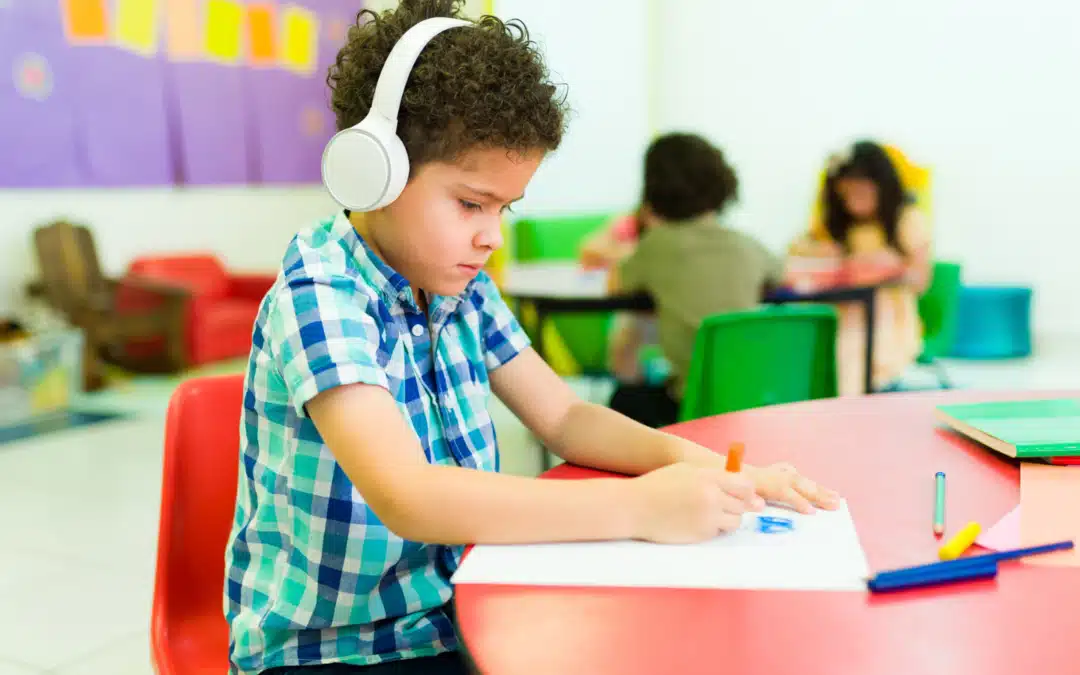
- Noise-reducing elements like rugs, panels, or access to noise-reducing headphones to help students who are sensitive to sound.
- Easy access to sensory tools such as fidgets, weighted items, or movement seats that let students manage their sensory needs without leaving the room every time.
These details help prevent overload and give students more control over their environment.
Flexible seating and workspaces
In a strong autism resource room, there is more than one “right” way to sit and work. The space is set up so staff can match the environment to the student, not the other way around.
You are likely to see:
- Individual desks or workstations where students can focus with fewer distractions when they need quiet, independent time.
- A small group table for guided instruction, social skills practice, or collaborative tasks in a controlled, supportive setting.
- A comfortable corner or quiet zone where students can regulate, take a short break, or reset before returning to work.
This flexibility lets staff shift between academic time, social practice, and regulation without leaving the room.
This is where autism resource rooms stop being “just another classroom.” The physical layout itself becomes a tool for school autism support, helping students feel safer, more prepared, and more ready to learn from the moment they walk through the door.
The Special Education Tools That Make These Rooms Work
Inside an autism resource room, everything on the shelves is there for a reason. The tools are chosen to match how autistic students learn, communicate, and regulate. Instead of expecting students to “fit” the classroom, these supports shape the room around what actually works for them.
Below are some of the most common special education tools you’ll find in autism resource rooms and how they’re used as real, everyday resources on autism, not just extras.
Visual supports
Visuals turn expectations into something concrete and predictable. They help students see what’s coming next, what is being asked, and how to move from one step to another without relying only on spoken language.
Common visual supports include:
- Picture schedules and choice boards that show the order of activities and give students a clear sense of what is happening now and what comes next.
- Social stories or visual scripts that prepare students for tricky situations like group work, fire drills, assemblies, or schedule changes.
- Visual timers that make time feel less abstract by showing how long a task, break, or transition will last.
These tools make transitions easier, reduce anxiety, and support more independent movement through the school day.
Academic supports
In an autism resource room, academics are adjusted to match how students process information, not watered down. The goal is access, not less learning.
Examples of academic supports include:
- Modified assignments that break big tasks into smaller, manageable steps so students can see clear progress instead of feeling overwhelmed.
- Graphic organizers that help with structuring writing, understanding reading passages, or organizing steps in a math problem.
- Multi-sensory materials—like manipulatives, hands-on tools, or tactile resources—that let students learn by seeing, touching, and doing instead of only listening.
These kinds of school autism support strategies help students stay engaged and show what they know in ways that fit their strengths.
Communication tools
Communication does not look the same for every autistic student. A good autism resource room recognizes that and keeps flexible options ready.
You’ll often see communication supports such as:
- AAC devices or picture-based systems for students who are non-speaking or minimally speaking, so they can ask for help, share choices, and participate in lessons.
- Sentence starters, conversation cards, or visual prompts that guide students through starting, maintaining, or ending a conversation in low-pressure ways.
These tools give students more control over how they express themselves and help staff respond to behavior as communication, not just “acting out.”
Regulation and sensory tools
Staying regulated is a huge part of being ready to learn. Autism resource rooms usually build regulation into the environment instead of treating it as an afterthought.
Typical regulation and sensory tools include:
- Calm-down kits with fidgets, stress balls, visual breathing prompts, or simple self-regulation cards students can follow on their own or with support.
- Movement options like wobble stools, therapy balls, or planned movement breaks that let students reset their bodies without being punished for needing to move.
By treating regulation as part of learning, not separate from it, these tools help students return to class work with more focus and less stress.
How Students Use Autism Resource Rooms During the Day
The way a student uses an autism resource room is usually written into their IEP or support plan. A day might look like this:
- Morning check-in: A student starts the day in the resource room to review their visual schedule, talk through any changes, and get grounded before heading to their homeroom.
- Targeted academic block: For one or two subjects, the student comes back for small-group or one-on-one instruction using adapted materials and special education tools that fit their learning profile.
- Sensory or regulation breaks: When the classroom becomes overwhelming, the student can use the resource room for a short, structured break instead of melting down or shutting down at their desk.
- Social or life skills sessions: Students may work on conversation skills, self-advocacy (“I need a break”), organization, or daily living tasks in a more controlled setting, then practice those skills back in general education.
This rhythm turns the autism resource room into a hub of school autism support rather than just a destination when things go wrong.
How Autism Resource Rooms Support Academic Progress
Families sometimes worry that time in a resource room means less instructional time. In reality, the goal is often the opposite: to make instruction more accessible so students can actually learn instead of spending their energy just coping.
In these rooms, staff can:
- Slow the pace and check for understanding more frequently.
- Present material in smaller chunks with clear visuals.
- Use repetition without embarrassment or social pressure.
- Adjust the way information is delivered (more visual, more concrete, more hands-on).
For many students, this is the first time they experience what a truly accessible lesson feels like. That can rebuild confidence and make it easier to re-engage in general education classes.
Social, Emotional, and Behavioral Support in Autism Resource Rooms
Academic help is only part of the picture. Strong autism resource rooms also provide:
- Emotion coaching: Helping students identify feelings, triggers, and early warning signs before a meltdown or shutdown.
- Coping skill practice: Breathing exercises, movement strategies, self-advocacy scripts (“I need a quieter space”), and problem-solving.
- Structured peer interaction: Small groups where students can practice turn-taking, conversational back-and-forth, and shared activities with guidance.
This kind of school autism support turns the room into a place where behavior is understood, not punished. Challenging behavior is seen as communication, and staff use resources on autism to respond in more informed ways.
What Families Can Ask About Autism Resource Rooms
If your child’s school mentions an autism resource room, or if you think your child needs one, some helpful questions include:
- How often will my child use the resource room, and for what parts of the day?
- What specific special education tools and strategies will be used with my child?
- How will skills taught in the autism resource room be carried over into the regular classroom?
- How is progress measured for both academics and regulation skills?
- Can I see the room and meet the staff who will be working with my child?
The more clearly the school can answer these questions, the more confidence you can have that the autism resource room is built around real, student-centered resources on autism, not just a label.
Turning a Room Into Real Support
A sign on the door that says “resource room” is not enough. What matters is how the space is used, what tools are available, and whether autistic students feel safer, more understood, and more capable because of it.
When schools combine:
- Thoughtfully designed autism resource rooms,
- Consistent school autism support throughout the day, and
- The right special education tools tailored to each student,
Those rooms stop being “somewhere kids are sent” and become a vital part of student success.
If you are a parent or educator looking for better resources on autism, a good first step is to ask specific questions: Who is the room designed for? What tools are used every day? How are skills practiced in the resource room carried back into general education? The answers to those questions reveal far more about support than any brochure or mission statement.
The Dan Marino Foundation builds on this kind of real-world support with digital tools and programs that strengthen life skills, communication, and independence for autistic students. For schools that want their autism resource rooms to do more than just offer a quiet space, partnering with organizations like the Dan Marino Foundation can add practical, easy-to-use resources that help students succeed not only in the room, but in the rest of their school day and beyond.
FAQs: Autism Resource Rooms & School Support
What is an autism resource room and how is it different from a regular classroom?
An autism resource room is a dedicated space where autistic students can get targeted support for academics, regulation, and social skills. It is usually quieter, more structured, and filled with special education tools that match how autistic students learn. The goal is not to replace the regular classroom but to give students a place where skills can be taught, practiced, and then carried back into general education.
How do autism resource rooms fit into a student’s IEP or support plan?
For most students, use of the autism resource room is written into the IEP or support plan. The plan can outline when the student goes there, what kind of school autism support they receive, and which goals are being addressed. That might include reading support, social skills practice, sensory breaks, or communication work. The room becomes one of the main resources on autism that the school uses to meet those documented goals.
What kinds of students benefit most from autism resource rooms?
Autism resource rooms often help students who:
- Are easily overwhelmed by noise, movement, or constant group work
- Need more time to process instructions or complete tasks
- Require visual supports, structure, or sensory tools to stay regulated
- Benefit from direct teaching of social, communication, or life skills
Students do not have to be at the same academic level to benefit. The room is meant to be flexible enough to support different profiles while still using shared tools and routines.
What are some examples of special education tools used in autism resource rooms?
Common special education tools include visual schedules, first/then boards, task strips, social stories, graphic organizers, sensory seating, calm-down kits, and AAC systems. These are not “extra” items. They are core resources on autism that help students understand what is happening, stay regulated, and show what they know without being overwhelmed by the environment.
How do autism resource rooms support sensory needs during the school day?
Many autistic students need help with sensory overload long before behavior becomes challenging. A good autism resource room is set up with softer lighting, lower noise, and clear visual organization. It may offer noise-reducing headphones, fidgets, weighted items, or a quiet corner. Staff use these tools intentionally so sensory regulation is treated as part of learning, not as something separate from the school day.
Will time in an autism resource room isolate my child from peers?
It depends on how the room is used. When schools use autism resource rooms well, students still spend time with peers in general education but return to the room for specific blocks, skills, or support. The idea is to use school autism support to make inclusion more successful, not to remove students from classmates completely. A good question to ask the school is: “How will time in the resource room help my child participate more fully in their main classroom?”
How can families tell if an autism resource room is really helping?
Signs that the resource room is working include fewer meltdowns, better regulation, clearer communication, and more steady academic progress. You might also notice that your child talks about feeling calmer, more understood, or less “in trouble” at school. Regular updates, data on IEP goals, and specific examples of growth are important resources on autism that families can ask for in meetings.
What questions should parents ask about autism resource rooms during school meetings?
You can start with questions like:
- What does a typical session in the autism resource room look like for my child?
- Which special education tools will you use regularly with them?
- How will skills taught in the room be reinforced in the main classroom?
- How will you share progress with us at home?
These questions help you see whether the room is being used in a thoughtful, student-centered way or simply as a place to send students when things are hard.
Where can I find additional resources on autism that schools might use or recommend?
Many schools use a mix of district materials, state guidelines, and external resources on autism such as training programs, toolkits, and digital platforms. Organizations like the Dan Marino Foundation create tools that focus on life skills, communication, and independence. Asking your school which materials they rely on and how they choose them can give you a clearer picture of their approach.
How can schools improve their autism resource rooms over time?
Stronger autism resource rooms usually grow out of feedback and ongoing learning. Schools can:
- Review which tools are actually helping and which are not used
- Train staff regularly on updated school autism support strategies
- Involve families and autistic students when planning changes to the room
- Add new resources on autism, including digital tools, to support life skills and independence
When schools treat the resource room as a living, evolving part of their support system, it becomes a place where autistic students are not just “managed” but actively set up for success.
